
How do bees make honey?
How bees make honey – The sweet secret of the hive
Bees, architects and honey producers
In the collective imagination, honey is a sweet, golden product, but for bees, it is above all an essential energy reserve for survival, especially during winter. Honey production is the result of collective work carried out by thousands of bees organized into colonies.
Each bee has a specific role:
-
The queen lays eggs to ensure the survival of the colony.
-
Drones (males) are responsible for reproduction.
-
Worker bees perform several tasks during their lifetime: they are nurses, ventilators, guards, wax makers, and finally foragers.
The honeycomb cells built in the hive are used to store pollen, nectar, and honey, but also to house the larvae. It is in these hexagonal cells that the collected nectar will slowly turn into honey.
Harvesting nectar – the first step toward honey
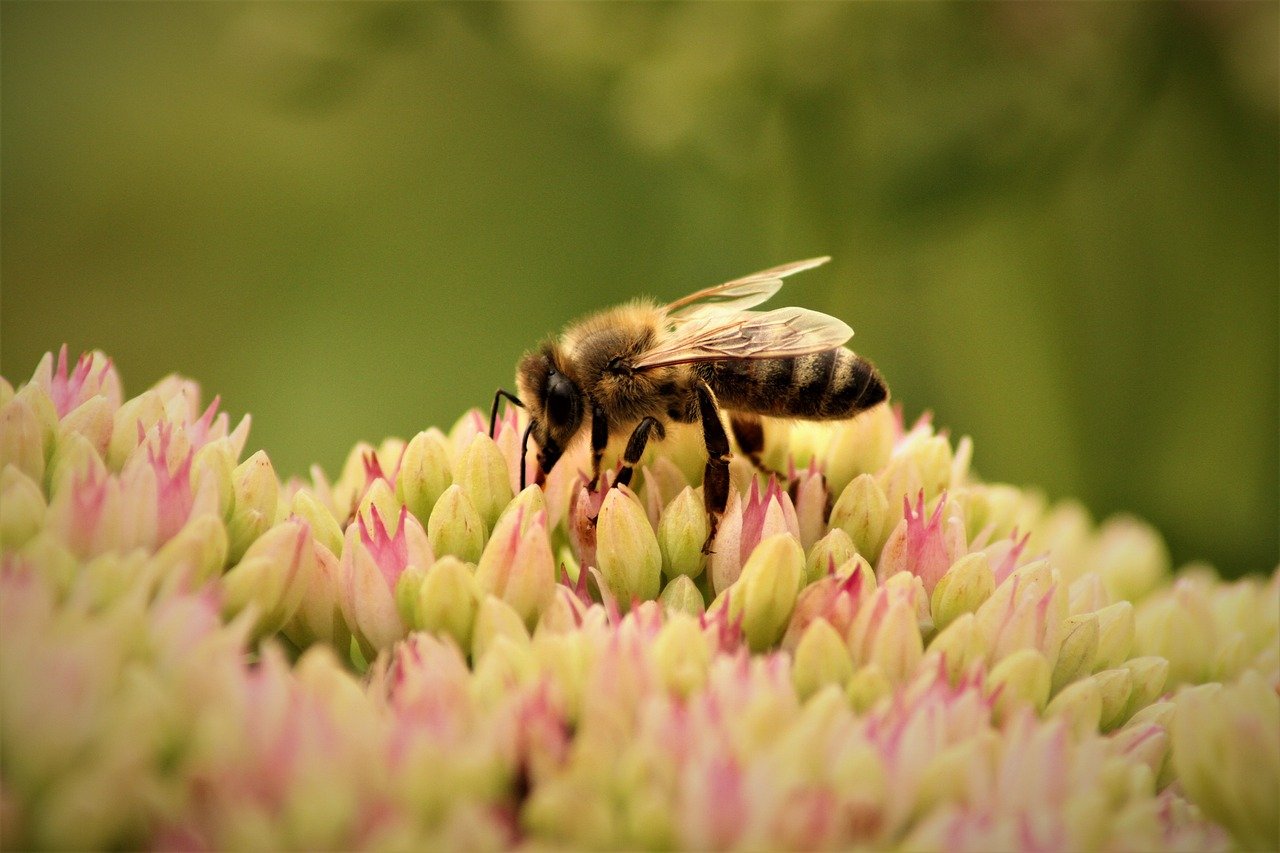
Honey production begins long before the beekeeper opens the hive. Forager bees leave the colony in search of nectar-producing flowers, which produce sugar-rich nectar. They also visit certain tree species to collect honeydew, a sweet substance secreted by aphids or other insects.
Each forager sucks up nectar using its proboscis-like tongue and stores it in itshoney stomach, also known asthe"honey sac." As soon as it is collected, this nectar is mixed with enzymes present in the bee's saliva, thus beginning its transformation.
At the same time, bees ensure pollination: by flying from flower to flower, they transport pollen, enabling plants to reproduce. This is a fundamental ecological role that contributes to biodiversity.
Transforming nectar into honey – a complex natural process
Once her jablot is full, the forager returns to the hive. She transfers the nectar to another worker bee through trophallaxis (mouth-to-mouth exchange). This process is repeated several times, allowing enzymes to act and break down complex sugars into simple sugars, which are easier for bees to digest and more stable for storage.
The nectar, which is still very rich in water (around 70%), must be dehydrated. The bees deposit it in shallow cells and flap their wings to ventilate the hive and promote evaporation. This ventilation work can take several days, until the humidity level reaches around 18%.
When the honey is ready, the cells are sealed with a thin layer of wax, ensuring that it will keep for months or even years.
The beekeeper and honey harvesting
When the cells are capped, this is the signal to the beekeeper that the honey is ready. Harvesting usually takes place in late spring and summer.
The steps are as follows:
-
Opening the hive and removing the frames filled with honey.
-
Deoperculation, which consists of removing the thin layer of wax using a knife or a heated harrow.
-
Extraction in a centrifugal extractor that causes the honey to flow out of the cells.
-
Filtering to remove impurities.
-
Pot and store in a cool, dry place.
This traditional method preserves all the taste and nutritional qualities of honey.
The different types of honey
The taste, color, and texture of honey vary depending on the flowers visited and the season. Among the best known are:
-
Acacia honey: clear, mild, and liquid, perfect for sweetening hot drinks.
-
Lavender honey: fragrant, floral, prized for its delicacy.
-
Chestnut honey: dark, full-bodied, with woody notes.
-
Fir honey: produced from honeydew, dark in color, with a resinous aroma.
-
Mountain honey: a blend of high-altitude flowers, often creamy.
Each honey has its own aromatic signature, influenced by the surrounding plants, climate, and terroir.
The importance of honey for nature and humans
For bees, honey is a vital source of energy, especially in winter when flowers are scarce. For humans, it is a natural and nutritious food, rich in carbohydrates, minerals, amino acids, and antioxidants.
Beyond its taste, honey symbolizes a unique link between nature, agriculture, and biodiversity. Its production depends directly on the health of bees and their environment. Protecting bees therefore also means preserving our food security.
Conclusion
Honey production is a masterpiece of natural engineering, combining the ancestral know-how of bees with the measured intervention of the beekeeper. From collecting nectar to bottling, each step is a meticulous and coordinated task.
The next time you taste a spoonful of honey, remember that it is the result of the hard work of thousands of bees and the richness of our floral environment. A true gift from nature, to be savored with gratitude.


