Viking mead: the legendary drink of the Nordic peoples
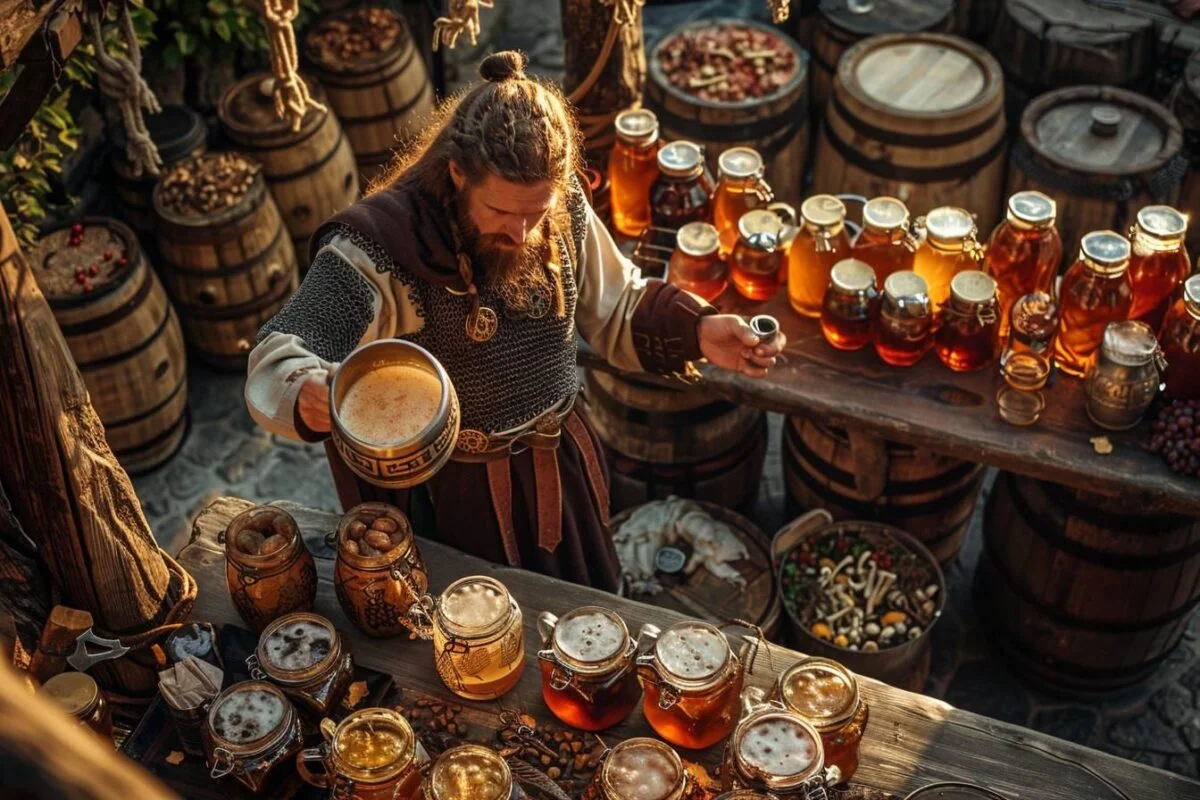
Mead is often presented as the drink of the Vikings, an ancient alcoholic beverage made from water, honey, and fermentation. Long before beer and even wine in some northern regions, mead occupied a central place in Scandinavian culture. Associated with gods, feasts, and celebrations, it is one of the legendary alcoholic beverages that has survived the centuries.
In this article, delve into the history of Viking mead, discover its uses and symbols, and learn how to prepare a traditional Viking mead recipe.
What is mead?
Mead is one of the oldest alcoholic beverages in the world. It is simply the result of fermenting a mixture of:
- water
- honey
- natural yeasts
Depending on the amount of honey, the fermentation time, and the addition of plants or spices, mead can be:
- sweet or dry
- light or powerful
- still or sparkling
It is a craft beverage with a unique aroma, highly appreciated for its roundness and floral notes.
Viking mead: an alcoholic beverage steeped in symbolism
The sacred drink of the Norse gods
Mead plays a central role in Norse sagas.
The most famous is "Miðgarðs mjöð, " or poetic mead, which is said to offer wisdom and inspiration.
It is frequently associated with:
- Odin, god of knowledge
- Freya, goddess of fertility and magic
- The Einherjar, warriors of Valhalla
For the Vikings, drinking mead was not just a festive occasion: it was a link to the gods and a powerful cultural act.
An alcohol for celebrations and camaraderie
Viking feasts
During banquets and gatherings, the Vikings consumed:
- mead
- barley beer
- fermented fruit drinks
Mead, which was more expensive because it depended on honey, was reserved for:
- at important ceremonies
- at the wedding
- to the offerings
- military victories
It symbolized honor, prosperity, and community.
Drinking horns
Mead was often served in animal horns, which were polished and decorated.
This image has become the visual emblem of Viking culture.
How did the Vikings make their mead?
The Vikings had neither industrial yeast nor modern equipment. Their mead was created using:
- spring water
- raw honey
- natural yeasts present in the air and on honeycombs
- local herbs: juniper, myrtle, heather, rowan berries, imported spices...
Fermentation took place in clay jars or wooden barrels.
Fermentation times were long: from several weeks to several months, sometimes a year for the most prestigious meads.
Viking mead recipe (traditional version)
For a reconstruction close to the ancestral mead.
Ingredients:
- 1 liter of spring water
- 300 to 400 g of raw honey (dark honey = more intense mead)
- Optional spices: cinnamon, juniper berries, cloves, heather
- Natural yeast (traditional method) or mead yeast (modern method)
Traditional method (without added yeast)
This is the closest version to the original Viking alcohol.
1. Mixing honey and water
2. Adding natural elements
Add:
- a small piece of honeycomb
- juniper berries
- dried flowers
These elements contribute aromas + wild yeasts.
3. First fermentation
Pour the mixture into a clay jar or an open container.
Cover with a cloth.
Ferment for 7 to 20 days, depending on the temperature.
4. Filtration
Filter for removing impurities and plants.
5. Maturation
Transfer to an airtight container.
Leave to rest for at least 1 month, ideally 3 to 6 months.
Modern version (with yeast)
More reliable, more stable:
- Honey + water
- Mead yeast
- Fermentation 3-6 weeks
- Maturation 2-3 months
The result is more predictable, but slightly less "wild" than the original Viking mead.
The taste of Viking mead
A traditional mead offers:
- a roundness derived from honey
- a hint of natural acidity
- floral or woody notes
- a golden to amber color
The spices added by the Vikings, particularly local berries, sometimes gave it a more robust and rustic character.
Mead: a Viking alcohol that has become trendy
In recent years, mead has experienced a global revival. It appeals to people because:
- history buffs
- fans of Norse mythology
- craft beer enthusiasts
- curious foodies
From medieval taverns to craft breweries,Viking mead is once again becoming a must-have alcoholic beverage, appreciated for its natural qualities and legendary origins.
Mead, Viking beer, or other Nordic alcohol?
Contrary to popular belief:
- The Vikings drank beer more often (less honey available).
- but mead was the prestigious alcohol, the drink of ceremonies and gods
- Other beverages existed: Nordic cider, berry wine, spiced mead...
However, mead remains the iconic alcoholic beverage associated with their culture.
Conclusion: a Viking legacy that lives on
Viking mead is not just an alcoholic beverage:
it is a legendary drink, deeply rooted in the culture of the Nordic peoples, a symbol of celebration, brotherhood, and spirituality.
Whether you want to explore your origins, understand Viking traditions, or make your own Viking mead recipe, this ancient drink continues to fascinate and captivate.


