Honeydew, a concentrate of minerals and natural flavors
Introduction
When we think of honey, we often imagine bees gathering nectar from flowers. However, some honeys do not come from floral nectar, but from another equally fascinating source: honeydew.
Darker, stronger, and richer in minerals, honeydew honey is a little-known treasure from the hive. At Ruche & Flore, we are committed to promoting these exceptional honeys, which come from preserved forests and traditional beekeeping expertise.
1. What is honeydew?
Honeydew is a sweet substance secreted by certain insects (such as aphids or scale insects) when they feed on tree sap.
Bees then collect it from leaves and trunks, just as they would with flower nectar.
👉 In summary:
- Nectar → comes from flowers.
- Honeydew → comes from trees (sap transformed by insects).
The bees then transform this substance into a dense, aromatic honey, often darker and richer than floral honeys.
2. The origins of honeydew
Honeydew mainly forms in coniferous forests (fir, spruce, pine) or deciduous forests (oak, lime, beech).
In Europe, it is mainly found in mountainous and wooded regions.
At Ruche & Flore, our honeydew honeys come from preserved natural areas, where bees benefit from wild flora and forests rich in species.
3. A different kind of honey, with a unique composition
Honeydew honey differs from floral honey in its more complex composition:
- Less simple sugars (glucose, fructose),
- More minerals (potassium, magnesium, iron, calcium),
- Presence of amino acids, enzymes, and trace elements,
- Dark color and woody flavor, slightly malty.
It is this mineral richness that gives it its nickname of "forest honey" or "mountain honey."
4. The incomparable taste of honeydew honey
Its flavor profile is very different from flower honeys:
- Woody and balsamic notes,
- Slightly caramelized flavors,
- Powerful and persistent aromas,
- A subtle bitterness that appeals to lovers of full-bodied honeys.
💡 It goes particularly well with:
- mature cheeses (Comté, sheep's cheese, Parmesan),
- sweet and savory dishes,
- toasted bread or nuts,
- herbal teas and hot drinks.
5. The color and texture of honeydew honey
Visually, honeydew honey is immediately recognizable:
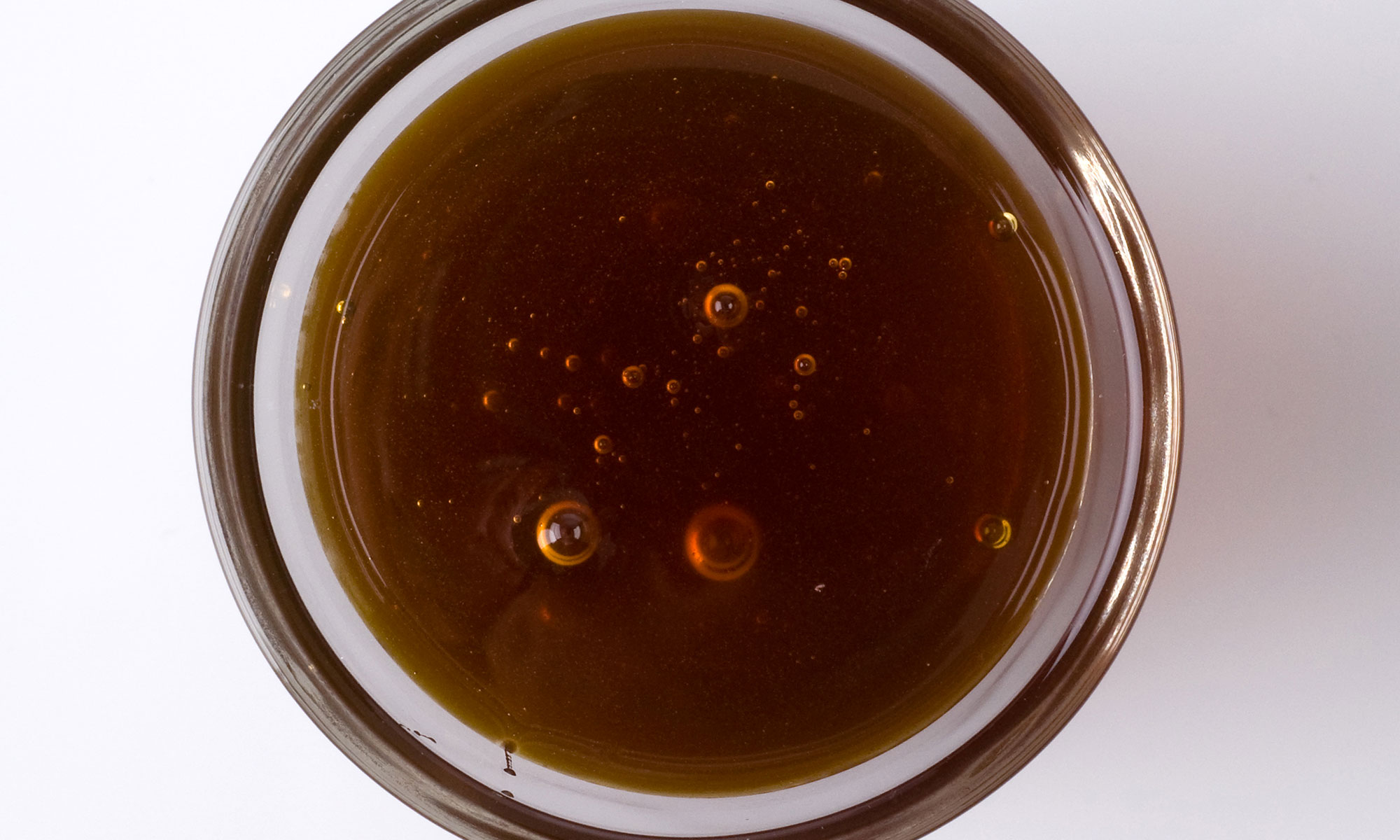
- Color: dark brown to amber black.
- Texture: fluid and creamy, it crystallizes slowly.
- Luster: it often reflects green or coppery highlights depending on the forest of origin.
These characteristics make it a honey that is highly prized by connoisseurs, as beautiful to the eye as it is delicious to the palate.
6. How can you recognize high-quality honeydew honey?
Authentic honeydew honey must have:
- a dark, uniform color,
- a strong and complex flavor,
- a clearly indicated origin (forest, fir tree, mountain),
- and above all, no industrial heating.
At Ruche & Flore, our honeys are raw, unpasteurized, and sourced from traditional Swiss beekeeping, guaranteeing the product's complete authenticity.
7. Honeydew honey vs. floral honey
| Criterion | Floral honey | Honeydew honey |
|---|---|---|
| Origin | Flower nectar | Sap transformed by insects |
| Color | Clear to golden | Dark to black |
| Flavor | Sweet, floral | Full-bodied, woody |
| Mineral content | Average | High |
| Crystallization | Quick | Slow |
| Dominant aroma | Sweet, fruity | Balsamic, malty |
💡 These two types of honey complement each other: floral honey for sweetness, honeydew honey for depth and aromatic richness.
8. How should honeydew honey be stored?
Like all artisanal honeys, it can be stored for a very long time at room temperature.
A few tips:
- Store it away from light and moisture.
- Always close the jar after use.
- Avoid the refrigerator, which accelerates crystallization.
Honeydew honey retains its fluid texture longer than flower honeys, making it ideal for those who prefer liquid honey.
9. Honeydew honey at Ruche & Flore
At Ruche & Flore, we offer artisanal honeydew honey, harvested in Swiss forests, in the heart of unspoiled areas.
Its creamy texture, woody notes, and dark color make it a rare and authentic product, to be enjoyed on its own or given as a gift.
10. Honeydew, a natural wonder to be rediscovered
Honeydew honey is a refined alternative to classic floral honeys.
It symbolizes the balance between the wild nature of forests and the meticulous work of bees.
Whether you are a fan of full-bodied honey, curious about new flavors, or looking for a gourmet gift, honeydew will seduce you with its complexity and authenticity.
Conclusion
Honeydew is much more than just honey: it is a work of nature, born from the collaboration between trees, insects, and bees.
Rich in minerals, aromas, and character, it embodies the very essence of forest beekeeping.
At Ruche & Flore, we are proud to promote these rare honeys, produced with respect and passion.
Savor the intensity of honeydew honey, let yourself be carried away by its woody notes, and discover a new facet of the world of bees.
Harvested in Swiss forests, our artisanal honeydew honey captivates with its creamy texture, amber color, and intense woody notes.
👉 Available now in our online store: OrganicHoneydew Honey


