Chestnut honey: everything you need to know about this honey with its unique taste
Chestnut honey: everything you need to know about this honey with its unique taste
Introduction
Among the most iconic honeys of our terroirs, chestnut honey occupies a special place. With its dark amber color, intense aroma, and slightly bitter flavor, it appeals to lovers of products with character. Harvested from chestnut trees in full bloom during the summer, this honey is rare, unique, and renowned for its taste and natural properties. In this article, we will explore its origins, characteristics, benefits, uses, and some tips on how to choose and enjoy it.
What is chestnut honey?
A forest origin
Chestnut honey is produced by bees that gather nectar from the flowers of the chestnut tree (Castanea sativa), a majestic tree found mainly in the mountainous and hilly regions of Europe: Cévennes, Ardèche, Italy, Corsica, Switzerland, etc. Flowering generally takes place between June and July, which means that this honey has a limited seasonal production.
A distinctive color and texture
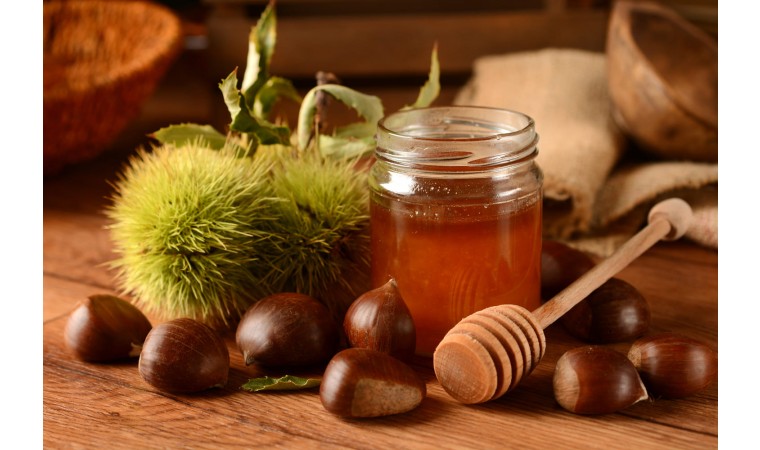
Unlike lighter flower honeys such as acacia or lavender honey, chestnut honey has a dark color, ranging from deep amber to mahogany brown. Its texture is generally fluid and liquid for several months before slowly crystallizing, which is indicative of its high fructose content.
The unique flavors of chestnut honey
An intense, woody flavor
This honey is renowned for its aromatic strength. It is distinguished by a woody, full-bodied, and slightly bitter taste, sometimes enhanced with a hint of licorice or caramel. It is a honey that particularly appeals to lovers of powerful flavors.
A lingering fragrance
The aroma reveals floral, tannic, and warm notes, reminiscent of the forest and wood warmed by the sun. This honey leaves a lasting impression on the palate, unlike milder, more subtle honeys.
The benefits of chestnut honey
Rich in antioxidants
Thanks to its dark color, chestnut honey is particularly rich in polyphenols and flavonoids, natural antioxidants that help combat oxidative stress and cellular aging.
Natural support
Although this honey cannot be considered a medicine, it is traditionally valued for:
-
Support blood circulation,
-
Soothe the throat and respiratory tract,
-
Bring vitality and energy,
-
Aids digestion thanks to its slightly tonic notes.
An energizing honey
Very rich in minerals (potassium, magnesium, manganese, iron), it is also an excellent honey for athletes and active people, providing a natural energy boost.
How should chestnut honey be consumed?
In the kitchen
Chestnut honey is a valuable ally in gastronomy:
-
To sweeten hot drinks (black teas, strong herbal teas),
-
In salad dressings and marinades for meat or cheese,
-
As an accompaniment to strong cheeses such as Roquefort, mature goat's cheese, or Comté,
-
In desserts (gingerbread, cakes, cookies), where it adds a deep and original flavor.
Natural treatment
Taken with a spoon in the morning or added to a warm drink (never too hot, so as not to alter its qualities), it provides an excellent daily energy boost.
Where can you find high-quality chestnut honey?
Not all honeys are created equal. To fully enjoy its flavors and benefits, choose:
-
Single-flower honeys guaranteed to be 100% chestnut,
-
Organic honey, harvested in protected areas,
-
Local producers and artisan beekeepers who respect bees and biodiversity.
Storage and practical advice
-
Store your chestnut honey away from light and heat, ideally in a cupboard.
-
Avoid the refrigerator, which accelerates crystallization.
-
If your honey crystallizes, you can liquefy it in a gentle water bath (below 40°C).
Chestnut honey: a rare and precious product
Because it depends on flowering, weather conditions, and the health of chestnut groves, chestnut honey is relatively rare and sometimes difficult to obtain. Its full-bodied flavor and intensity make it an exceptional honey, appreciated by connoisseurs as well as those looking for a natural, healthy, and authentic product.
Conclusion
Chestnut honey is much more than just a natural sweetener: it is a true treasure of the forests. With its dark color, powerful flavor, and numerous qualities, it deserves a place of honor in every kitchen and wellness routine. Whether you are a fan of aromatic honeys or looking for a product rich in antioxidants and minerals, chestnut honey is sure to win you over.
👉 Have you ever tasted chestnut honey? If not, prepare to be surprised by this rare and flavorful honey with a distinctive character.


